

Lize Spit
Lize Spit was born in 1988 and lives in Brussels. Her debut novel »Het smelt« (Das Mag, 2016) — published in German as »Und es schmilzt« (S. Fischer Verlag, 2017) — won numerous literary awards and has been translated into 15 languages. Her second novel, »Ik ben er niet« (Das Mag, 2020), appeared in German as »Ich bin nicht da« (S. Fischer Verlag, 2022). With »De eerlijke vinder« (CPNB, 2023) she published her third novel, the German edition is »Der ehrliche Finder« (S. Fischer Verlag, 2024). »Autobiografie van mijn lichaam« (Das Mag, 2024) is her fourth novel.
Her book Het smelt was on the bestseller list in Belgium and the Netherlands for more than a year. In 2023, the novel was adapted into a film, it was screened and awarded at the Sundance Film Festival and also won the prize for “Best Flemish Film” of the year. Lize Spit has won, among other awards, the Bronzen Uil for best debut novel and the Dutch National Bookseller Award. She appears frequently on talk shows and writes columns for the daily newspaper De Morgen. She has a MA in Screenwriting and and teaches Creative Writing at RITCS (Royal Institute for Cinema and Sound) in Brussels.
Recap: Lize Spit, Malu Schrader and Jane Chirwa at daadgalerie, May 21 2026.
Writing, to distance oneself. Writing, to reconnect.
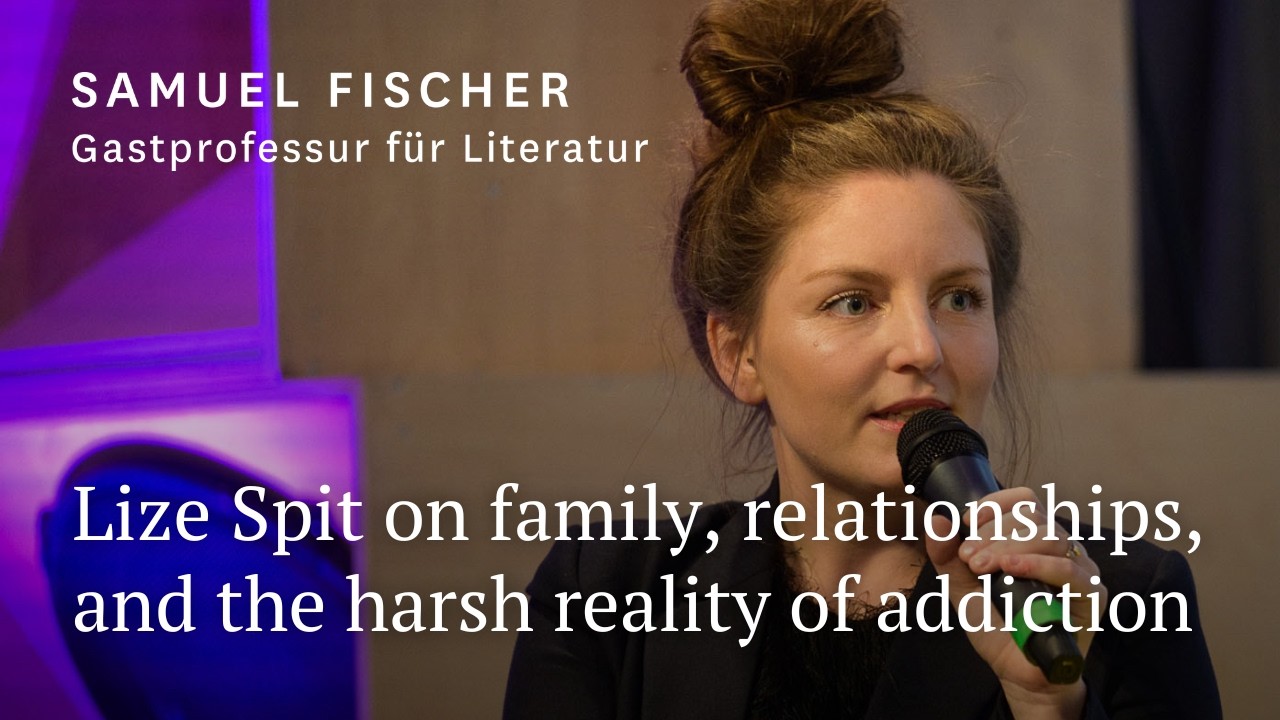
On May 21, Lize Spit and Malu Schrader spoke at the daadgalerie about body, language, and writing — about how writing allows us to detach from origins and how it helps us to find a way back to oneself.


Seminar “Tell, Don’t Show?!”
at Freie Universität Berlin
As part of the Samuel Fischer Guest Professorship, Lize Spit will teach a seminar entitled Tell, Don’t Show?! Literature in the Audiovisual Era in the summer semester of 2026. The course explores how novels can be rewritten for film. Students will be introduced to the fundamentals of screenwriting in order to carry out comparative analyses of books and their film adaptations. The seminar will examine specific novels and their screen versions across a range of genres, from timeless classics such as Sofia Coppola’s The Virgin Suicides (1999) and the Coen brothers’ masterpiece No Country for Old Men (2007) to more recent productions such as Wes Anderson’s The Wonderful Story of Henry Sugar (2023) and Clint Bentley’s Train Dreams (2025). The aim is to rethink the value of the literary: what can literature achieve that film cannot, and vice versa? Students will also be invited to develop their own creative writing skills through a variety of exercises, for example by transforming film scenes into literary texts.

The inaugural lecture took place on April 30th and the official event was on May 21, at daadgalerie.
Follow S.Fischer on social media or sign up for our newsletter to make sure you don’t miss out on registering for the events.
Inaugural Lecture


Books


